 Image 1 of 2
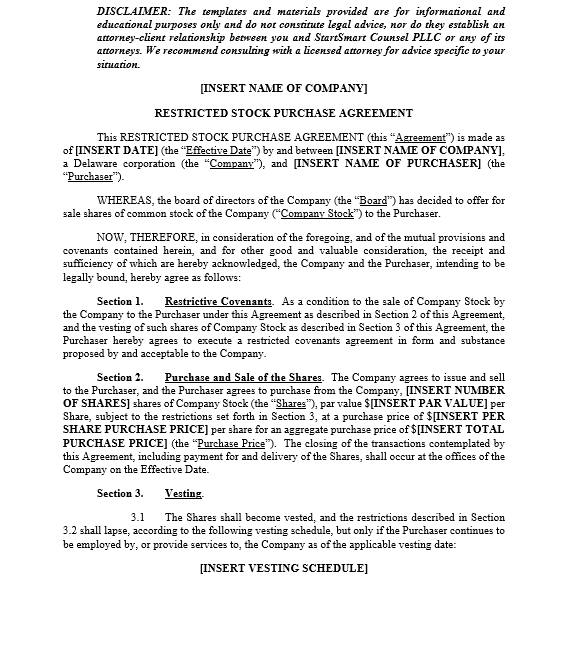 Image 2 of 2
About This Document
This Restricted Stock Purchase Agreement documents the sale of restricted shares of stock by a Company to an individual (the Purchaser) — typically an employee, consultant, or advisor.
It establishes key terms around ownership, vesting, repurchase rights, transfer restrictions, and rights of first refusal, protecting both the Company's interests and the Purchaser’s rights.
Who Should Use This Template
Startups and private companies issuing founder shares, employee stock, or advisor equity
Businesses structuring vesting schedules for equity-based incentives
Companies ensuring ownership protection for unvested shares through repurchase options
Organizations preparing for future fundraising or public offerings needing clean, documented cap tables
What the Template Includes
Purchase and sale terms, including:
Number of shares, purchase price, and payment terms
Vesting schedule, with optional provisions for:
Accelerated vesting upon termination without cause or for good reason
Acceleration in connection with a Change of Control
Company's Repurchase Right for unvested shares (and, optionally, vested shares before an IPO)
Transfer restrictions on unvested stock
Investment representations confirming the Purchaser's investment sophistication
Right of first refusal before the Purchaser sells vested shares
Market stand-off (lock-up) provisions for IPOs
Adjustment clauses for stock splits, mergers, or recapitalizations
Legends to be placed on stock certificates indicating restrictions
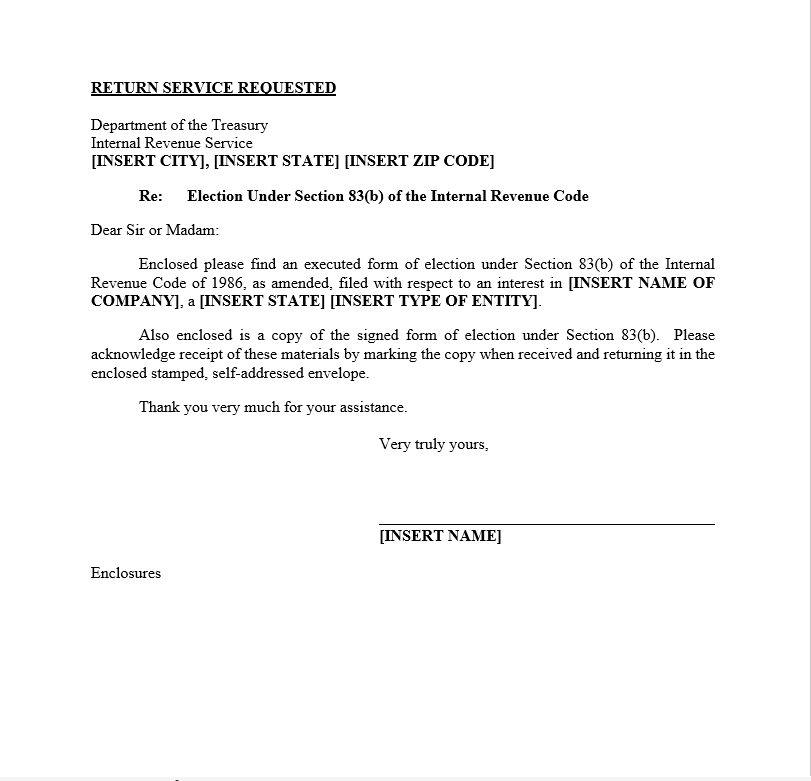
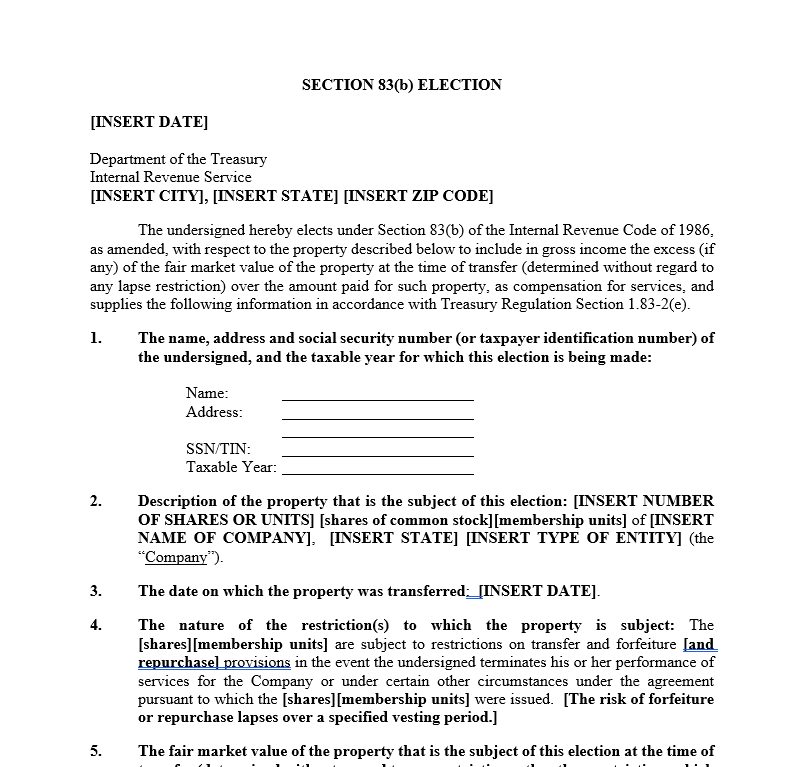
Guidance on filing an IRS Section 83(b) Election (with attached sample form)
Choice of governing law (Delaware default)
Editable Word format for full customization
Instructions for Completing the Template
Insert:
Company Name and State of Incorporation (usually Delaware)
Purchaser’s Name and Address
Effective Date of the agreement
Number of Shares Purchased, Per Share Price, and Total Purchase Price
Define:
Vesting schedule (e.g., 1-year cliff, monthly vesting over 4 years)
Whether acceleration rights apply upon termination without cause or upon a Change of Control
Clarify any Repurchase Rights and applicable pricing (Purchase Price or Fair Market Value)
Confirm restrictions:
Right of first refusal
Market standoff obligations
Attach completed Exhibit A (Section 83(b) Election Form) for Purchaser's tax filing
Make sure both Company and Purchaser sign and date the agreement.
Advise the Purchaser to file the 83(b) election within 30 days of the stock purchase to lock in favorable tax treatment.
Important Reminder
This document is provided as a template to assist with standard restricted stock purchase arrangements.
It does not constitute legal advice. You should consult a qualified attorney to tailor this Agreement for your specific vesting schedules, repurchase rights, and tax strategy — especially if planning future fundraising, IPOs, or equity incentive plans.
About This Document
This Restricted Stock Purchase Agreement documents the sale of restricted shares of stock by a Company to an individual (the Purchaser) — typically an employee, consultant, or advisor.
It establishes key terms around ownership, vesting, repurchase rights, transfer restrictions, and rights of first refusal, protecting both the Company's interests and the Purchaser’s rights.
Who Should Use This Template
Startups and private companies issuing founder shares, employee stock, or advisor equity
Businesses structuring vesting schedules for equity-based incentives
Companies ensuring ownership protection for unvested shares through repurchase options
Organizations preparing for future fundraising or public offerings needing clean, documented cap tables
What the Template Includes
Purchase and sale terms, including:
Number of shares, purchase price, and payment terms
Vesting schedule, with optional provisions for:
Accelerated vesting upon termination without cause or for good reason
Acceleration in connection with a Change of Control
Company's Repurchase Right for unvested shares (and, optionally, vested shares before an IPO)
Transfer restrictions on unvested stock
Investment representations confirming the Purchaser's investment sophistication
Right of first refusal before the Purchaser sells vested shares
Market stand-off (lock-up) provisions for IPOs
Adjustment clauses for stock splits, mergers, or recapitalizations
Legends to be placed on stock certificates indicating restrictions
Guidance on filing an IRS Section 83(b) Election (with attached sample form)
Choice of governing law (Delaware default)
Editable Word format for full customization
Instructions for Completing the Template
Insert:
Company Name and State of Incorporation (usually Delaware)
Purchaser’s Name and Address
Effective Date of the agreement
Number of Shares Purchased, Per Share Price, and Total Purchase Price
Define:
Vesting schedule (e.g., 1-year cliff, monthly vesting over 4 years)
Whether acceleration rights apply upon termination without cause or upon a Change of Control
Clarify any Repurchase Rights and applicable pricing (Purchase Price or Fair Market Value)
Confirm restrictions:
Right of first refusal
Market standoff obligations
Attach completed Exhibit A (Section 83(b) Election Form) for Purchaser's tax filing
Make sure both Company and Purchaser sign and date the agreement.
Advise the Purchaser to file the 83(b) election within 30 days of the stock purchase to lock in favorable tax treatment.
Important Reminder
This document is provided as a template to assist with standard restricted stock purchase arrangements.
It does not constitute legal advice. You should consult a qualified attorney to tailor this Agreement for your specific vesting schedules, repurchase rights, and tax strategy — especially if planning future fundraising, IPOs, or equity incentive plans.