

Resource Center
Stay in the know with the latest news and expert insights from StartSmart Counsel. Our dedicated team of advisors regularly shares valuable updates, industry trends, and business wisdom to help you navigate the entrepreneurial journey. Explore our curated collection of news articles and blog posts to gain valuable insights and stay ahead in your startup endeavors.


Investor Nightmare: Founder Disappears, Updates Stop, What Rights Do You Actually Have?
You wired $250,000 into a promising SaaS startup. The pitch deck was tight, the founder charismatic, and early traction looked real. Then—radio silence. No updates. No responses to emails. The Slack channel goes quiet. Months pass, and you start to wonder: is this just poor communication, or something far worse?
This situation is more common than many investors admit, especially in early-stage and emerging industries like Web3, fintech, and SaaS. When founders go silent or effectively disappear, investors often feel powerless. But legally, you are not without recourse. The strength of your remedies depends heavily on how the investment was structured, what documents were signed, and how quickly you act.
This article breaks down the legal frameworks, enforcement tools, and strategic considerations investors should understand when a founder goes dark.
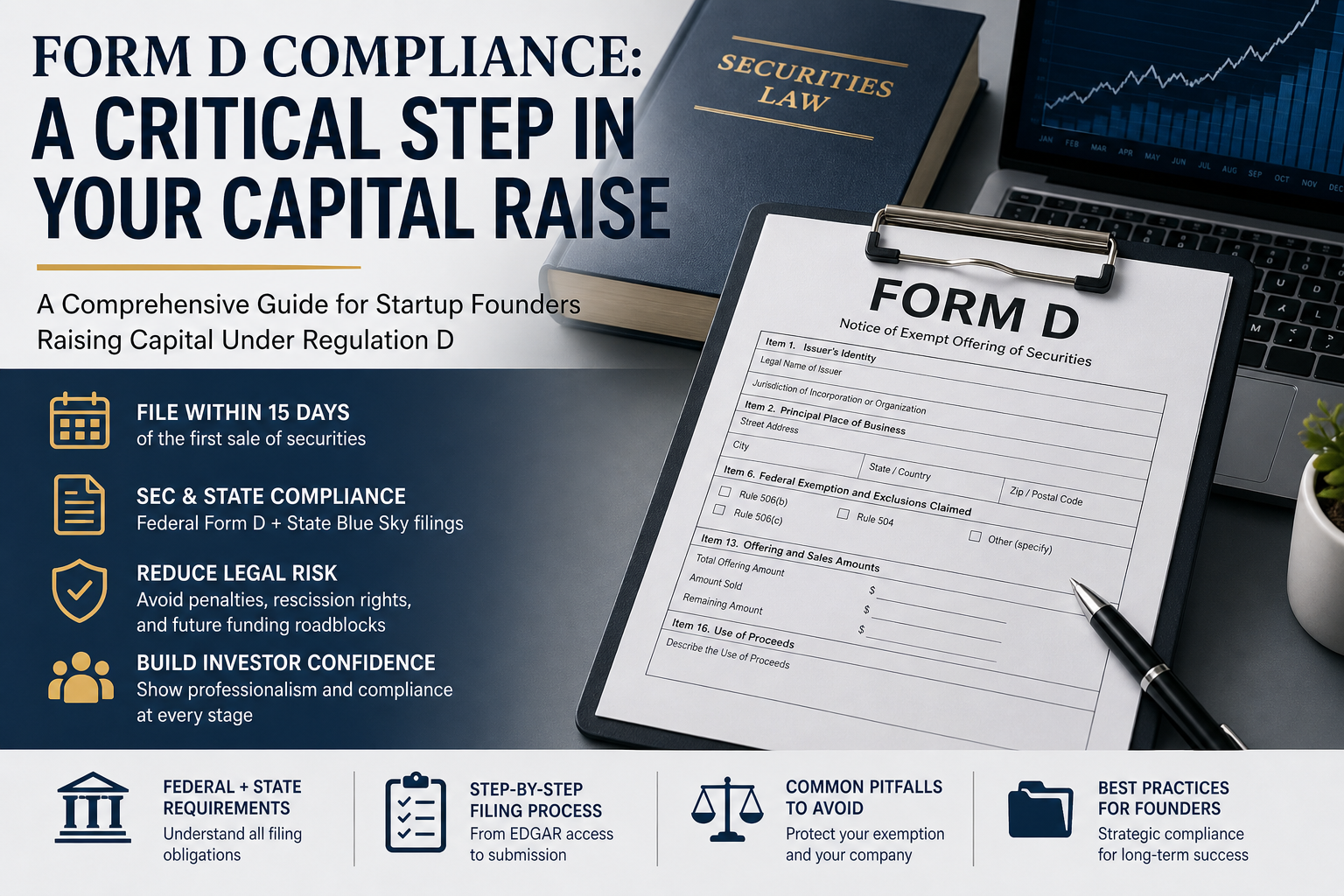
Missed Form D Filing? A Complete Legal and Strategic Guide to Regulation D Compliance for Startup Founders
For startup founders raising capital in the United States, Regulation D provides a critical pathway to secure funding without undergoing the burdensome process of SEC registration. Yet, this regulatory flexibility is conditioned on strict compliance obligations, one of which is the timely and accurate filing of Form D.
Despite its apparent simplicity, Form D is frequently misunderstood and improperly handled. Founders often delay filing, misclassify offerings, or overlook parallel state requirements. These errors rarely produce immediate consequences, but they tend to surface during institutional due diligence, later financing rounds, or acquisition negotiations, where they can materially disrupt transactions.
This article provides a comprehensive legal and operational guide to Form D. It covers the purpose of the filing, when and how to file, a full breakdown of all sections of the form, state law considerations, and the nuanced compliance risks that sophisticated founders must manage.
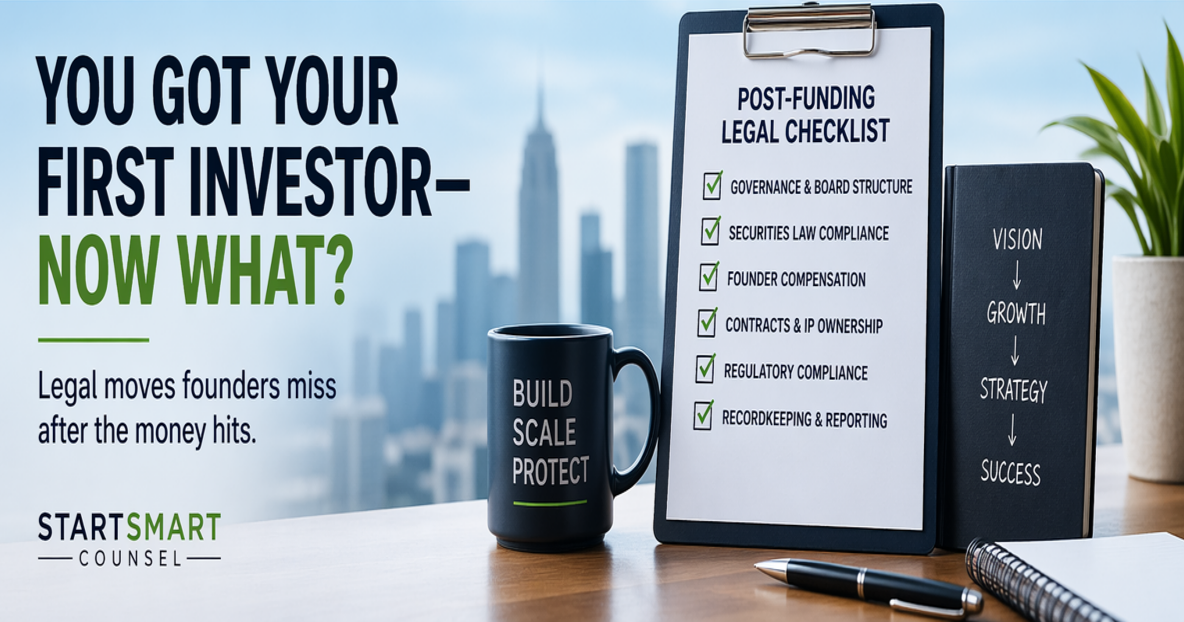
You Got Your First Investor! Now What? Legal Moves Founders Miss After the Money Hits
Closing your first round of funding feels like a finish line.
In reality, it is the beginning of a new level of responsibility, scrutiny, and legal exposure.
Most founders focus so much on getting the money that they overlook what needs to happen immediately after it hits the bank.
AI Is Running Your Business, But Is It Putting You at Legal Risk?
Artificial intelligence has quietly become the backbone of modern startups. From automating customer service to generating marketing content and even screening job candidates, AI is no longer a “nice-to-have”, it’s operational infrastructure.
Received a TCPA Demand Letter? Why Ignoring It Can Cost Your Business Thousands
Small and mid-sized businesses (SMBs) increasingly rely on outbound communications such as text messages, automated calls, and marketing campaigns to reach customers efficiently. However, these practices carry significant legal risk under the Telephone Consumer Protection Act (TCPA). When a TCPA demand letter arrives, some business owners are tempted to ignore it, dismissing it as a nuisance or assuming it lacks merit. This approach is a costly mistake.
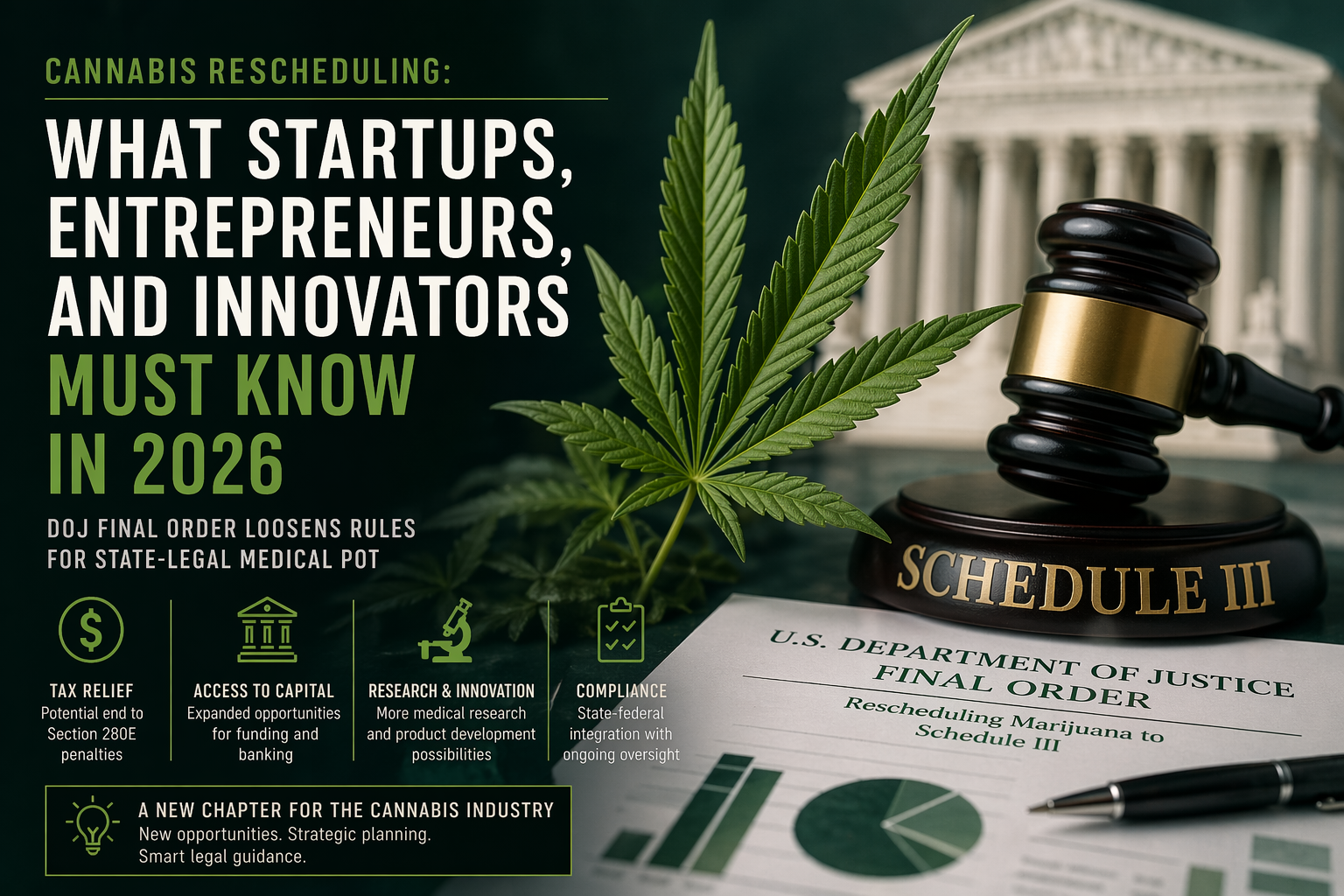
Federal Cannabis Rescheduling Creates Uncertainty: What Startups, Entrepreneurs, and Innovators Must Do Next
The U.S. Department of Justice’s recent final order loosening federal restrictions on state-legal medical marijuana marks one of the most consequential regulatory shifts in decades for a previously constrained industry. While the order stops short of full federal legalization, it initiates a transition of cannabis from Schedule I to Schedule III under the Controlled Substances Act, a move that carries profound implications for startups, investors, and innovators operating at the intersection of healthcare, biotechnology, finance, and consumer goods.

Facing Harsher Penalties for Financial Crimes? What the New U.S. Sentencing Guidelines Mean for Businesses and Executives
For business owners, executives, and compliance professionals, exposure to financial crime enforcement carries significant legal and reputational risk. The U.S. Sentencing Commission’s recent amendments to the federal sentencing guidelines, particularly those affecting economic crimes, represent a meaningful shift in how penalties may be calculated and imposed.
Most notably, the Commission has enacted the first inflation-based adjustment in over a decade, altering the monetary thresholds used to determine sentencing severity. While these changes may appear technical, their implications are substantial for startups, SMBs, and individuals operating in regulated industries.
This article examines the updated sentencing framework, the changes adopted, the reforms that were rejected, and what these developments mean for companies navigating white collar risk.
Book a Call Today!
Want to learn more? Schedule a consultation with one of our attorneys today.