

Resource Center
Stay in the know with the latest news and expert insights from StartSmart Counsel. Our dedicated team of advisors regularly shares valuable updates, industry trends, and business wisdom to help you navigate the entrepreneurial journey. Explore our curated collection of news articles and blog posts to gain valuable insights and stay ahead in your startup endeavors.

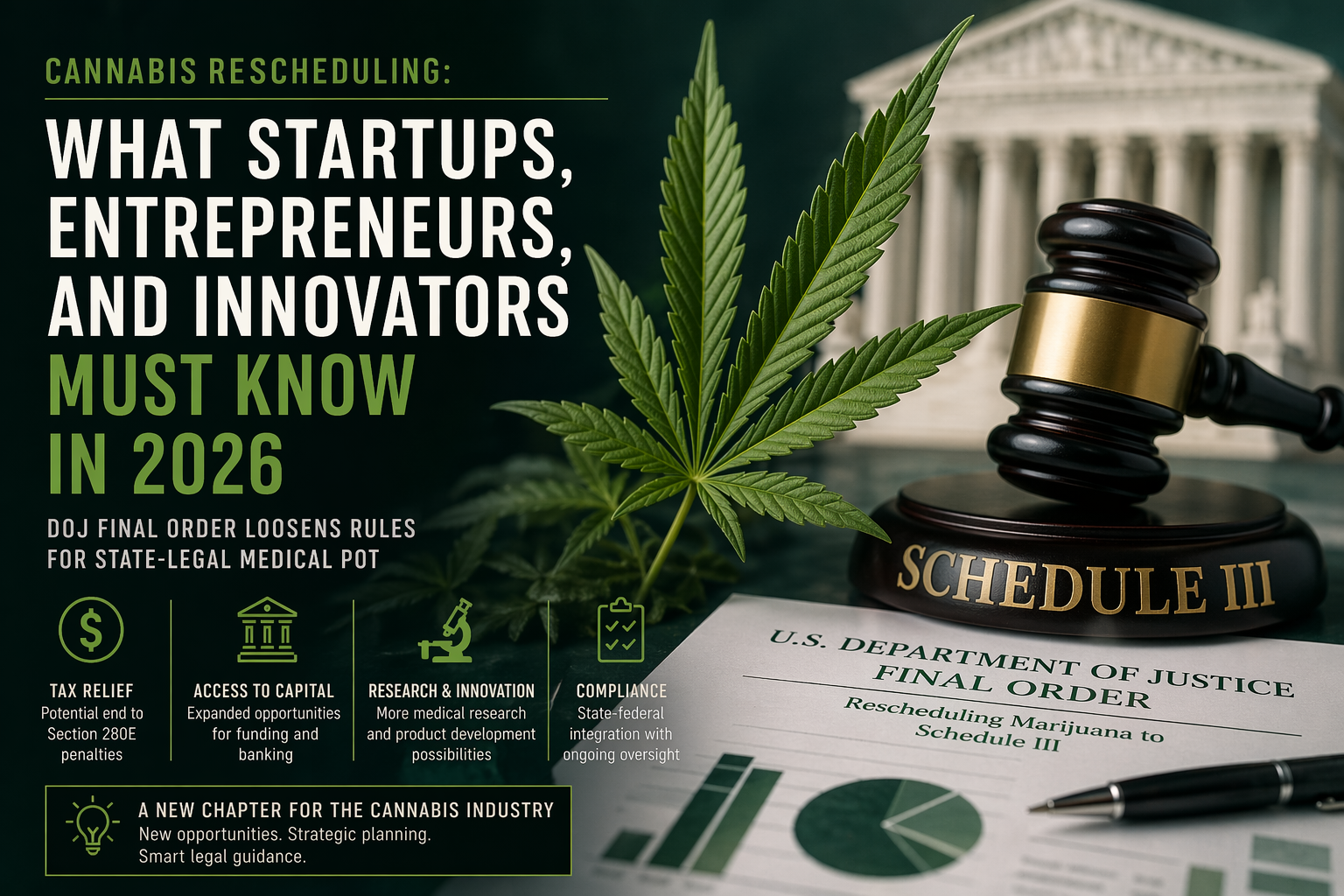
Federal Cannabis Rescheduling Creates Uncertainty: What Startups, Entrepreneurs, and Innovators Must Do Next
The U.S. Department of Justice’s recent final order loosening federal restrictions on state-legal medical marijuana marks one of the most consequential regulatory shifts in decades for a previously constrained industry. While the order stops short of full federal legalization, it initiates a transition of cannabis from Schedule I to Schedule III under the Controlled Substances Act, a move that carries profound implications for startups, investors, and innovators operating at the intersection of healthcare, biotechnology, finance, and consumer goods.

Facing Harsher Penalties for Financial Crimes? What the New U.S. Sentencing Guidelines Mean for Businesses and Executives
For business owners, executives, and compliance professionals, exposure to financial crime enforcement carries significant legal and reputational risk. The U.S. Sentencing Commission’s recent amendments to the federal sentencing guidelines, particularly those affecting economic crimes, represent a meaningful shift in how penalties may be calculated and imposed.
Most notably, the Commission has enacted the first inflation-based adjustment in over a decade, altering the monetary thresholds used to determine sentencing severity. While these changes may appear technical, their implications are substantial for startups, SMBs, and individuals operating in regulated industries.
This article examines the updated sentencing framework, the changes adopted, the reforms that were rejected, and what these developments mean for companies navigating white collar risk.

Token Launch Without a Lawsuit: How Founders Misread Securities Laws in Web3 Fundraising
Token launches remain one of the most legally complex fundraising mechanisms due to overlapping regulatory frameworks and evolving enforcement priorities. This article provides a detailed analysis of how the Howey Test is applied to digital assets, emphasizing the importance of economic substance over labeling. It examines high-risk factors such as pre-functional token sales, centralized development control, and profit-oriented marketing, all of which can trigger securities classification. The discussion extends beyond the SEC to include CFTC considerations, FinCEN obligations, and state-level regulatory exposure. The article also evaluates common structuring approaches—including SAFTs, Regulation D offerings, and offshore strategies—highlighting their legal tradeoffs and limitations. Founders gain insight into how legal design decisions affect token liquidity, exchange listings, investor participation, and long-term project viability.

HIPAA Isn’t Your Only Problem: The Hidden Healthcare Compliance Risks in Startup Vendor Contracts
Healthcare vendor agreements often impose obligations that exceed statutory requirements, creating significant hidden liability for startups and service providers. This article analyzes how contractual provisions—particularly indemnification clauses, data security representations, audit rights, and breach notification requirements—can expand exposure beyond HIPAA compliance. It explores the interaction between regulatory frameworks and private contractual risk allocation, demonstrating how failure to meet contractual standards can trigger liability even when regulatory compliance is maintained. The piece also addresses flow-down obligations to subcontractors, the limitations of cyber insurance coverage, and the increasing role of state privacy laws and FTC enforcement in shaping compliance expectations. Practical guidance is provided on negotiating high-risk provisions, aligning contractual commitments with operational capabilities, and mitigating exposure in healthcare transactions.

What It Takes to Structure a Master Development Agreement for a City (And Why Cities Are Starting to Think Like Startups)
Cities are no longer just regulators or landowners. Increasingly, they are acting like strategic operators—more akin to startups—leveraging legal and financial tools to attract capital, accelerate development, and compete for long-term economic relevance.
One of the most powerful—and often underutilized—tools enabling this shift is the Public-Private Partnership (PPP) statutory framework.

Struggling with AML Compliance Costs? How FinCEN’s Proposed AML/CFT Rule Could Reshape Obligations for Startups and SMBs
Regulatory compliance remains one of the most significant barriers to growth for startups and small-to-mid-sized businesses (SMBs) operating in financial services, fintech, and adjacent industries. Anti-Money Laundering (AML) obligations under the Bank Secrecy Act (BSA) have historically required substantial investment in personnel, systems, and documentation, often without clear alignment to actual risk exposure.

Your Compliance Gaps Are Killing Enterprise Deals: How Weak Fintech Controls Trigger Diligence Failures, Lost Revenue, and Valuation Discounts
Book a Call Today!
Want to learn more? Schedule a consultation with one of our attorneys today.